Super Mario 64 at 30 - a free excerpt from 50 Years of Boss Fights
Thirty years on, Bowser's three fights still define 3D boss battles.

Today (June 23) marks 30 years since the debut of the Nintendo 64 console and Super Mario 64 in Japan. The title was revolutionary, introducing fully-3D analogue control that could let players ensure that Mario could make certain jumps or throw penguins off high places.
I remember first playing Super Mario 64 at a friend's house in 1997, once the N64 and the game came out in the UK in March of that year. I couldn't believe how good the game looked and played, considering I was still playing Sonic 3 & Knuckles by that point. But the game stayed with me, and I've played so much of it since it was made available on the Nintendo Switch in various releases.
To mark the game's 30th anniversary, I'm making available the Super Mario 64 section from my second book, 50 Years of Boss Fights, released in 2023. It's free to read below, but I still have some copies of the book left, which can be signed and delivered to you.
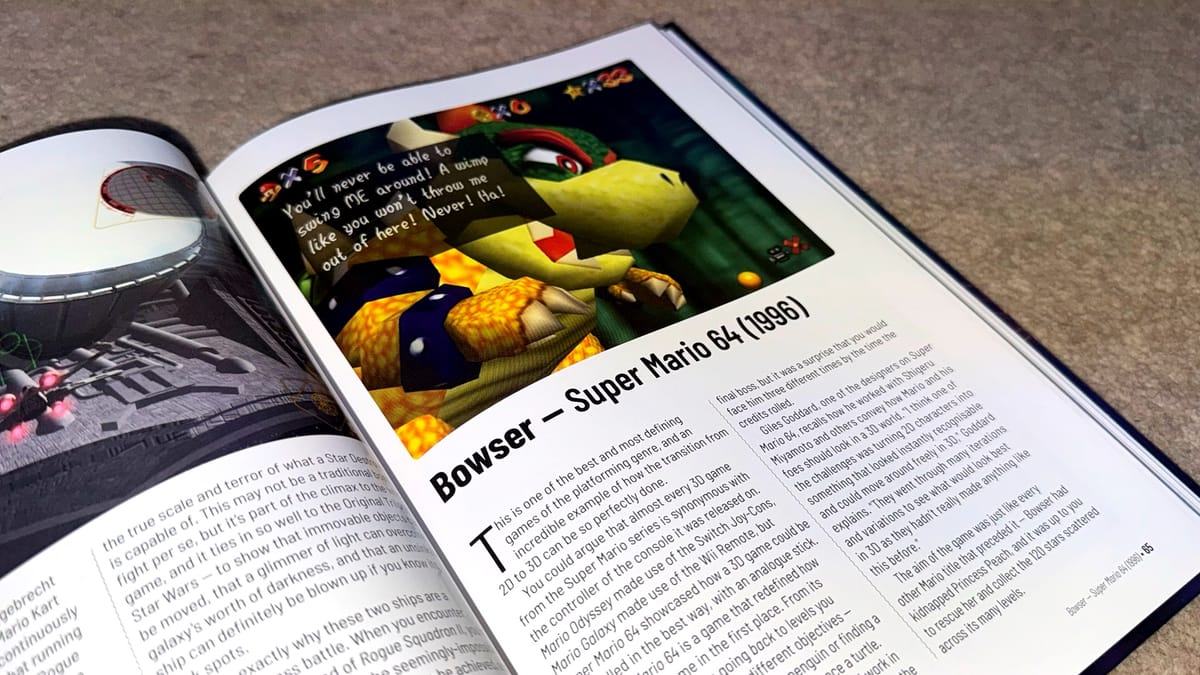
Super Mario 64 (1996)
This is one of the best and most defining games of the platforming genre, and an incredible example of how the transition from 2D to 3D can be so perfectly done.
You could argue that almost every 3D game from the Super Mario series is synonymous with the controller of the console on which it was released. Super Mario Odyssey made use of the Switch Joy-Cons, Super Mario Galaxy made use of the Wii Remote, but Super Mario 64 showcased how a 3D game could be controlled in the best way, with an analogue stick. Super Mario 64 is a game that redefined how you played a game in the first place. From its analogue control, to going back to levels you completed to complete different objectives, whether that was rescuing a penguin or finding a hidden section where you had to race a turtle.
And it also showcased how 3D could work in boss stages. Bowser was always going to be the final boss, but it was a surprise that you would face him three different times by the time the credits rolled.
Giles Goddard, one of the designers on Super Mario 64, recalls how he worked with Shigeru Miyamoto and others to convey how Mario and his foes should look in a 3D world. “I think one of the challenges was turning 2D characters into something that looked instantly recognisable and could move around freely in 3D,” Goddard explains. “They went through many iterations and variations to see what would look best in 3D as they hadn’t really made anything like this before.”
The aim of the game was just like every other Mario title that preceded it - Bowser had kidnapped Princess Peach, and it was up to you to rescue her and collect the 120 stars scattered across its many levels.
But before any of this, you’re brought to the title screen and a huge interactive image of Mario’s face. Goddard explained that it originated from his own testing: “The Mario head actually came from an experiment I made using my SGI workstation’s camera to control a 3D face model.”
From the moment you see Lakitu flying down with his camera and Mario emerging from the pipe, you know that you’re in for something completely different compared to what Super Mario Bros 3 and Super Mario World both previously offered.
Throughout the game, you’re collecting stars to progress through Peach’s Castle and reach new areas that house other levels, while you’re using the 3D camera to make sure you know where Mario is running to. Goddard said that great effort was taken to make sure that players’ first experience with the game would be a smooth one. “For most people, Super Mario 64 would have been their first experience with 3D, so I think Miyamoto-san wanted to make sure that the player could move around and view the bosses from all angles when it was possible.”
When you clear the ground floor, the basement, and the upper floor of the castle, you have to go to another level, with some great music that requires you to dodge many platforms, some moving, others with timers on them, alongside a bunch of electric objects to avoid, before you go down the final warp pipe to face Bowser. In his first fully polygonal debut, his head, mouth, and four limbs are fully animated, giving Mario’s antagonist a broad range of movement, which makes him walk like Godzilla.
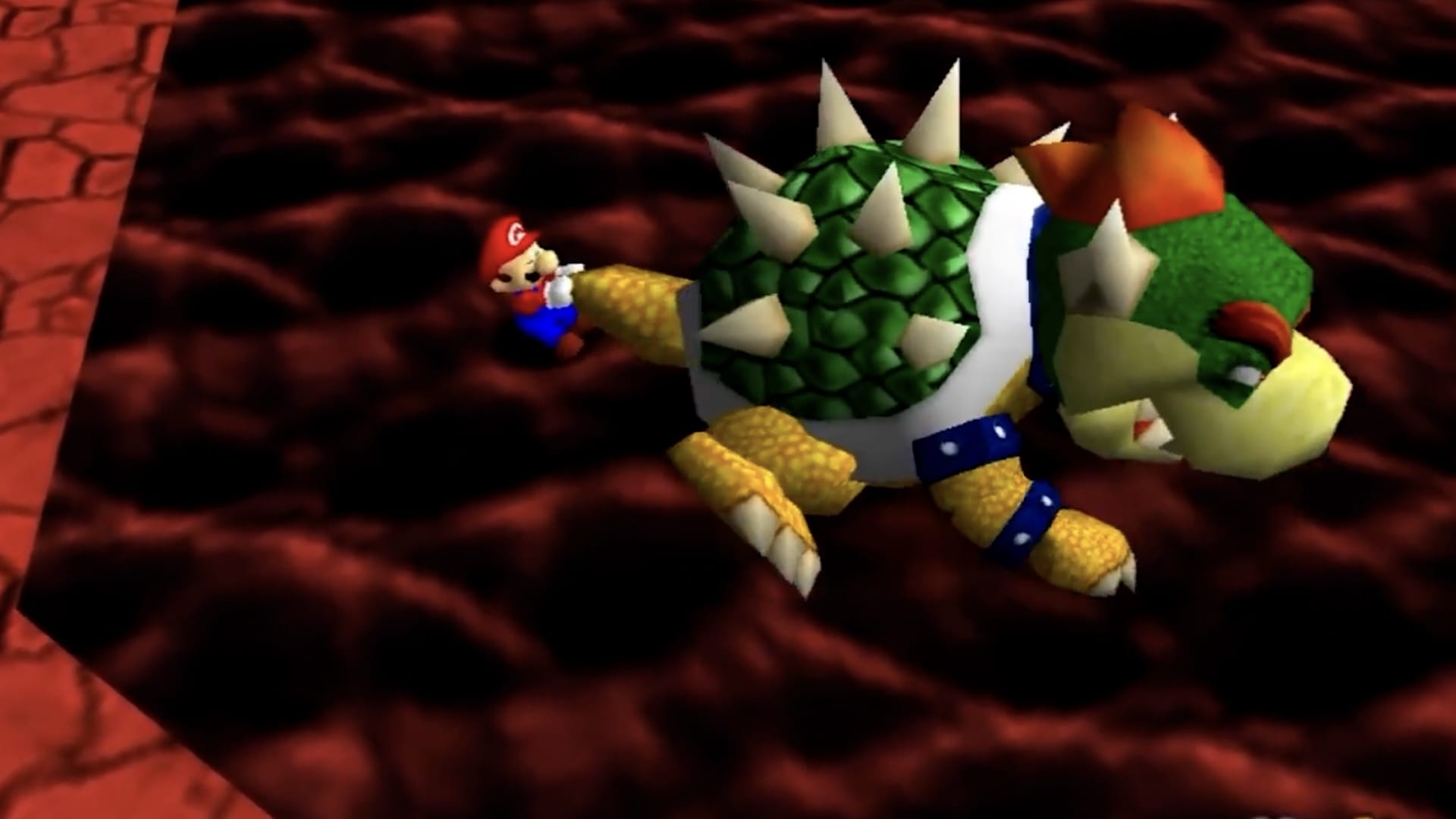
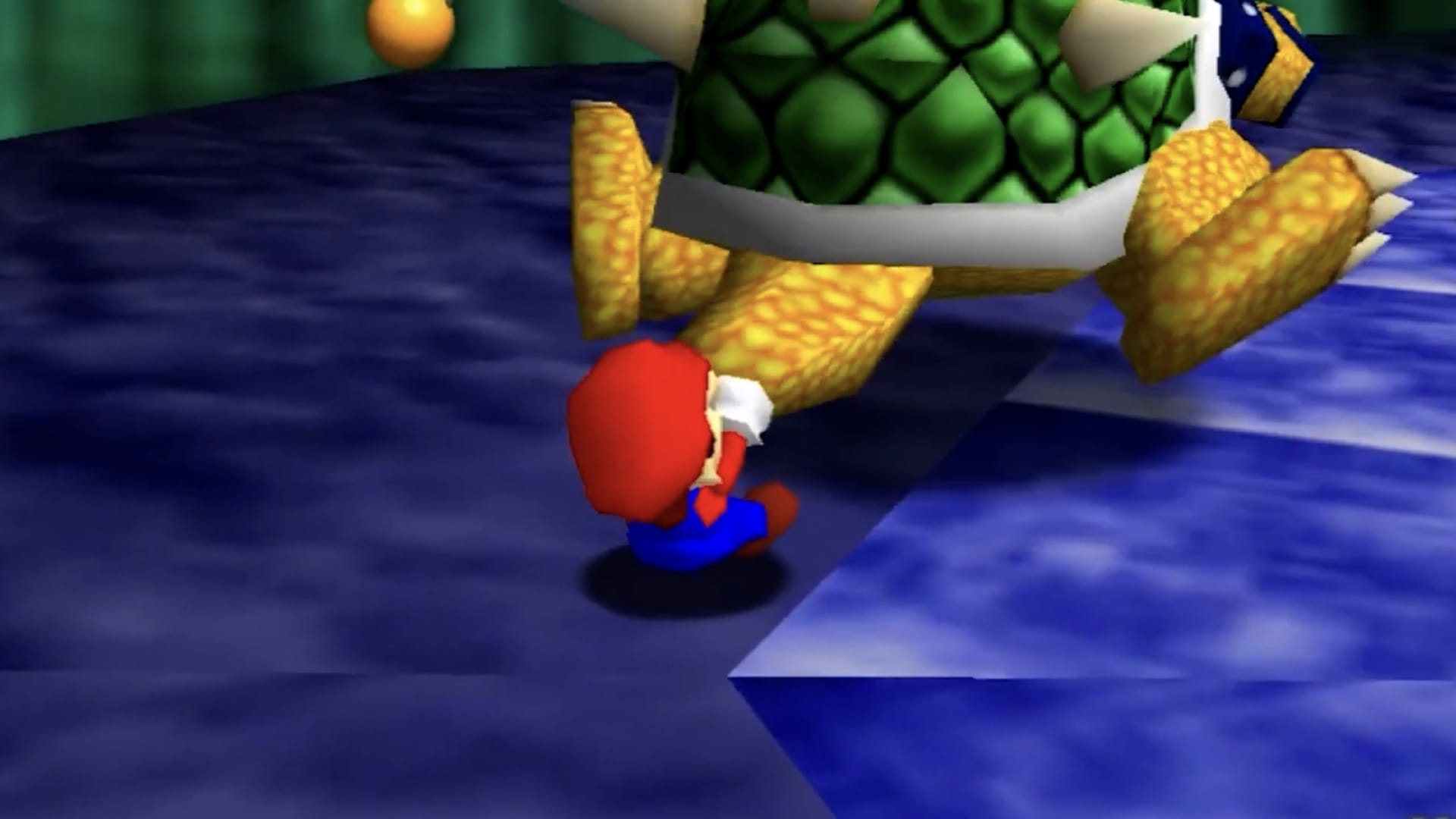
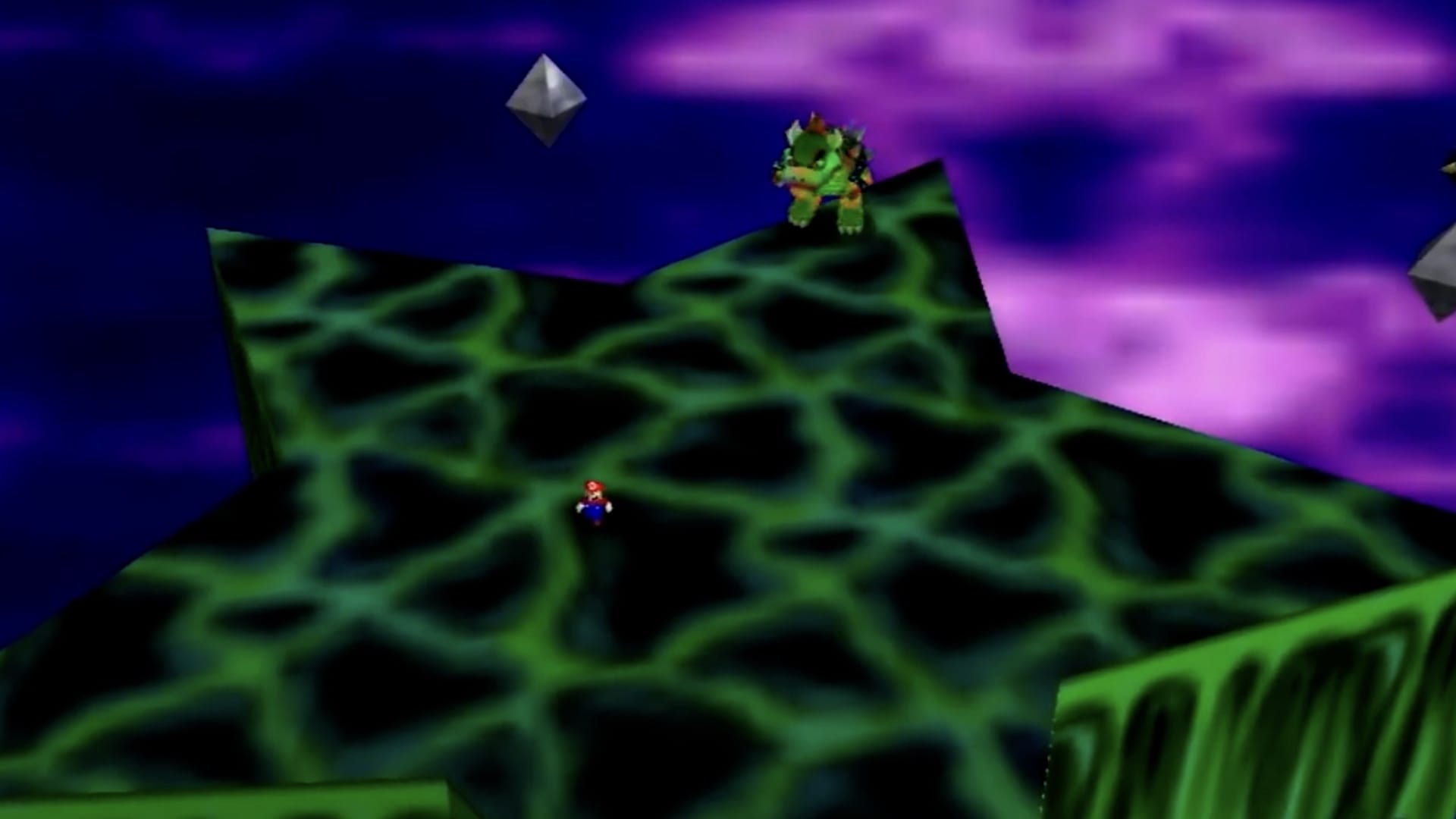
Each of these three battles is mostly the same. The camera starts by focusing on Bowser’s feet, and zooms out to emphasise his giant size as he towers over Mario and says a short line about how Princess Peach isn’t there. After traversing through the many levels of Super Mario 64, you’re still wondering how to beat Bowser. You think it’s just a matter of stomping on his head, similar to the Koopa enemies from earlier games, but Mario’s health only goes lower when you try this. You then wonder if there are any objects hidden on the platform that you have to throw in his direction, similar to when you face him in Super Nintendo’s Super Mario World.
But, as the game usually does, it gives you a new method in this fully-3D world. You have to run fast enough that you go behind him to grab his tail, then by rotating the analog stick, you find yourself swinging Bowser around in a circle, then letting go and throwing him off the platform three times in the first battle with him.
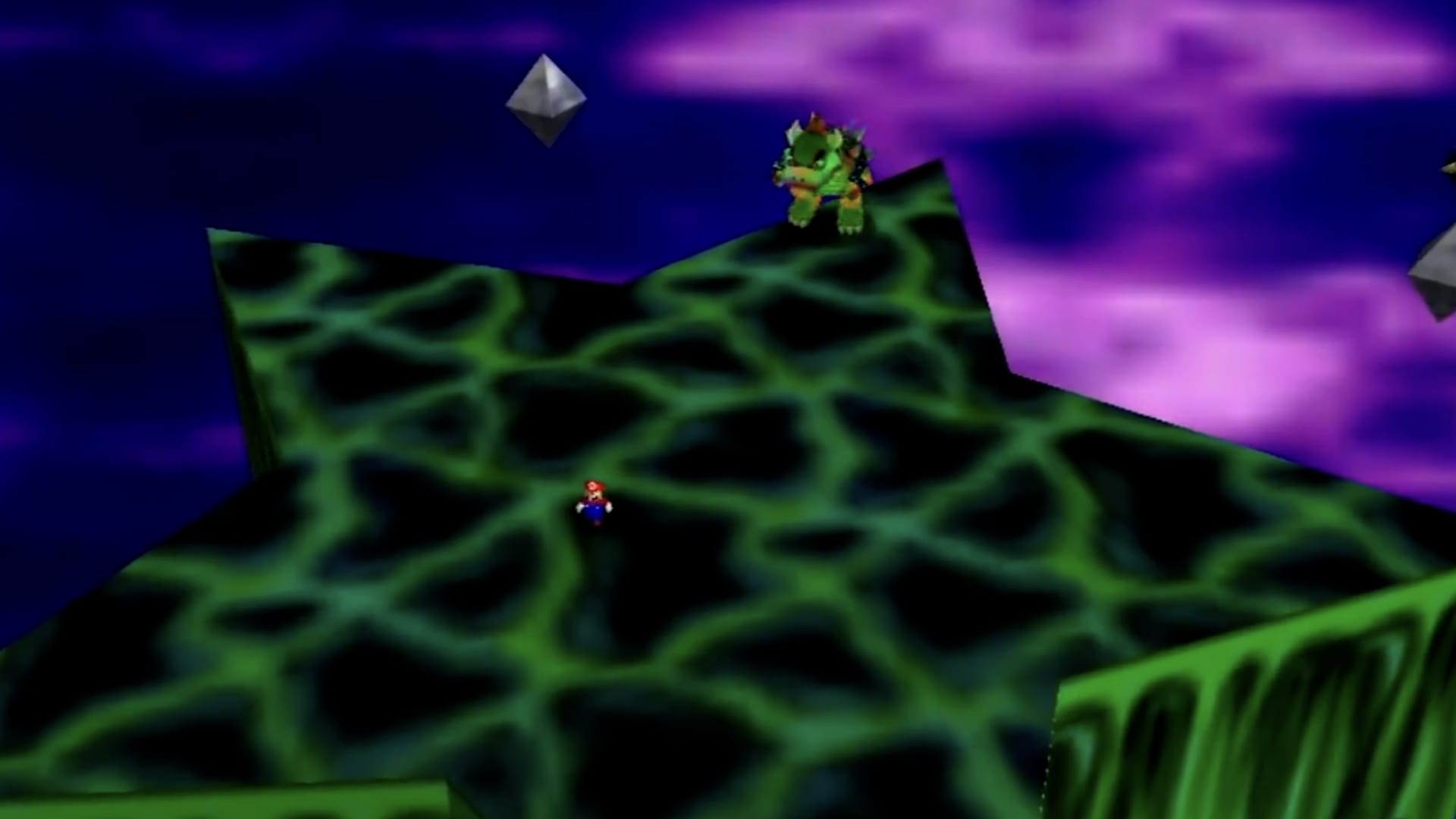
When it gets to the second encounter, the fight is the same, except that Bowser will stomp on the platform, causing Mario to slide around the arena, which means you’ll have to balance him to keep the plumber from falling off. But with the third and final encounter, the platform slowly crumbles away with every successful throw of Bowser, revealing the shape of a star and limiting the amount of room you have to manoeuvre in. You’re throwing Bowser at the bombs in the corners of the platform. And finally, Bowser will admit defeat and disappear, leaving a star in his wake for you to collect.
Mario is then given a pair of wings, and similar to Superman, he runs, jumps, and soars off into the distance, where a cut scene plays, and he lands outside the castle. There, Princess Peach is revealed to have been part of the stained glass window of her in the front of the castle all along. With the spell being broken, Peach and the kingdom are now free once again. She thanks Mario, and the game ends, a journey completed once more for the plumber.
Super Mario 64’s memorable final boss was the culmination of a game that set the standard for fully-3D platforming games, just as Tomb Raider did for the adventure genre. It redefined at the time how someone could complete a level from start to finish. Instead of running from left to right, it was up, down, back, forward, and more.
While the boss fight with Bowser was relatively simple, looking back, this was done on purpose. It was a template almost for players and developers alike, to show everyone how a boss could work in a fully-3D world and how a controller with a 360-degree analogue stick could also be a tool in this new way of playing games.
Undeniably, there were plenty of games that took inspiration from Mario 64, such as Rare’s Banjo-Kazooie and even, ironically, Sega’s Sonic Adventure, both released in 1998, and it would have been foolish to do anything else if you were developing a 3D game in the late nineties. Yet some games failed in trying to transition from 2D to 3D, such as Earthworm Jim 3D and Prince of Persia 3D, only getting worse as the years passed. But Super Mario 64 is a timeless classic, a masterclass in how to introduce the player to a 3D world with every mechanic. From its hub worlds, to different objectives in levels which keep them repeatedly fresh, and a moveset that you’d constantly discover new moves with by bashing different buttons on the N64 controller.
Bowser’s three fights only prove this further - they’re simple but effective, and only made you wonder as to what Nintendo would do next with Mario in 3D. While Super Mario Sunshine wasn’t the successor that many were hoping for in 2002, it was Super Mario Galaxy on the Nintendo Wii, released in 2007, that not only reinforced Super Mario 64’s values, but also pushed further how a boss could work with a completely new controller.