How Metal Gear Solid 4 showcases the best and worst of nostalgia at Shadow Moses
"I've been having that dream again..."

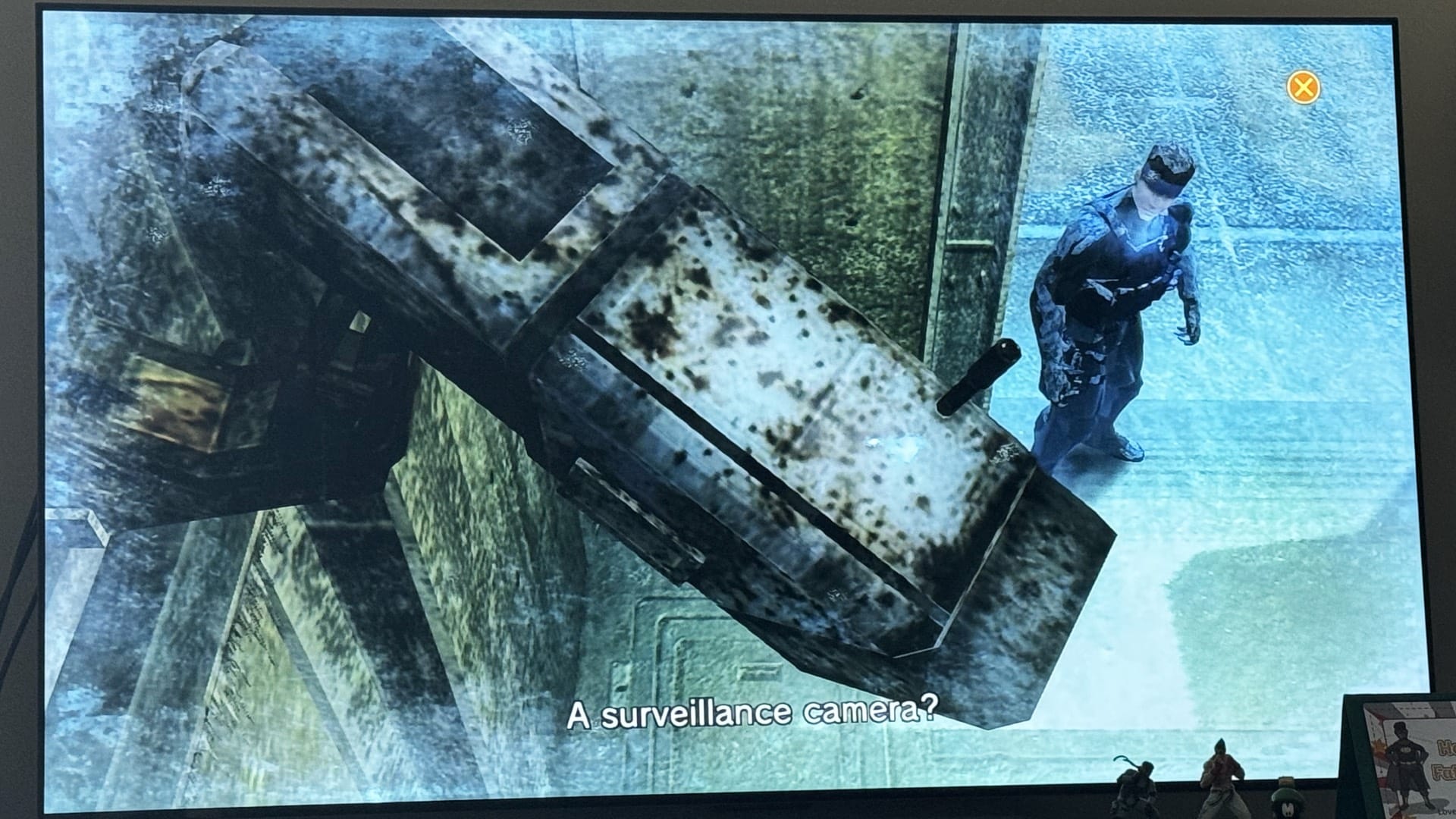
Throughout Metal Gear Solid 4: Guns of the Patriots, released in June 2008 for Sony's PlayStation 3 console, you're prompted with an orange X icon to press whenever the main protagonist, Solid Snake, encounters something that reminds him of a time long gone.
I've been thinking about nostalgia lately, especially in an age where it's easily accessible through social media and apps on your phone. Especially so, due to Master Collection Vol. 2 coming later this month, which finally frees MGS4 from its PS3 prison - making it available on Xbox Series S|X, PlayStation 5, Nintendo Switch 1/2, and PC.
It's led me to think back to when I bought a PS3 just to play this game. I did the same a few years before to play a demo of Metal Gear Solid 2, which came packaged with Zone of the Enders, another KONAMI game. But even now, I have a PS3 in my front room to play MGS4 whenever I want. Ultimately, to me, MGS4 is mostly about nostalgia, and how the game masterfully evokes it — in both good and bad ways.
Link to the Past
I'm someone who likes to focus on the present whilst having rough plans for the future. I find dwelling too much on the past can be dangerous. Yet there are those rare moments when I do think back to a certain time and laugh about something that can never be replicated again.
I find that one of the best ways to describe nostalgia is through a short scene from a film called Star Trek: Generations. The basic plot is about a phenomenon in space called The Nexus. It looks like a ribbon on fire, and if you're caught up in it, you're transported to a time when you were happiest — even though the experience is not real. A character in the film, Guinan, describes it as "Being inside joy. As if joy was something tangible and you could wrap yourself up in it like a blanket. And never in my life have I ever felt as content." To me, that represents much of the good that nostalgia can bring.
The antagonist, Soran, is obsessed with going back into the Nexus after being pulled away from it years earlier, as it reunites him with his deceased family. Even though it's not real. To me, it's a perfect way to describe the worst of nostalgia: The never letting go, always clinging onto the past — and never focusing on the present.
Yes, this issue is about Metal Gear Solid 4 — but I felt the above is needed to explain how I see nostalgia.
Even though there are moments throughout the game when you're reminded of past events and characters from earlier entries in the series, it's a certain chapter in the game where the feeling of nostalgia really hits home, as well as Snake himself.
"Press X to reminisce"
If you're not familiar with the Metal Gear Solid series as a whole, let alone the 'fourth' game, even though chronologically it's the sixth, here's some context:
The main protagonist is Solid Snake, an agent who is an expert in stealth, espionage, and more. He's a clone of a soldier who made his name in the 1960's, called Big Boss. He is revealed to be Snake's father in Metal Gear 2: Solid Snake, a game released on the MSX in 1990.
Snake usually faces off against those who are working with individuals working in the shadows to take over the world — this could be Revolver Ocelot, Liquid Snake (his twin brother), Solidus Snake (the third brother unveiled in MGS2), and the Patriots — the Star Wars equivalent of Emperor Palpatine, where the strings are being pulled in the shadows.
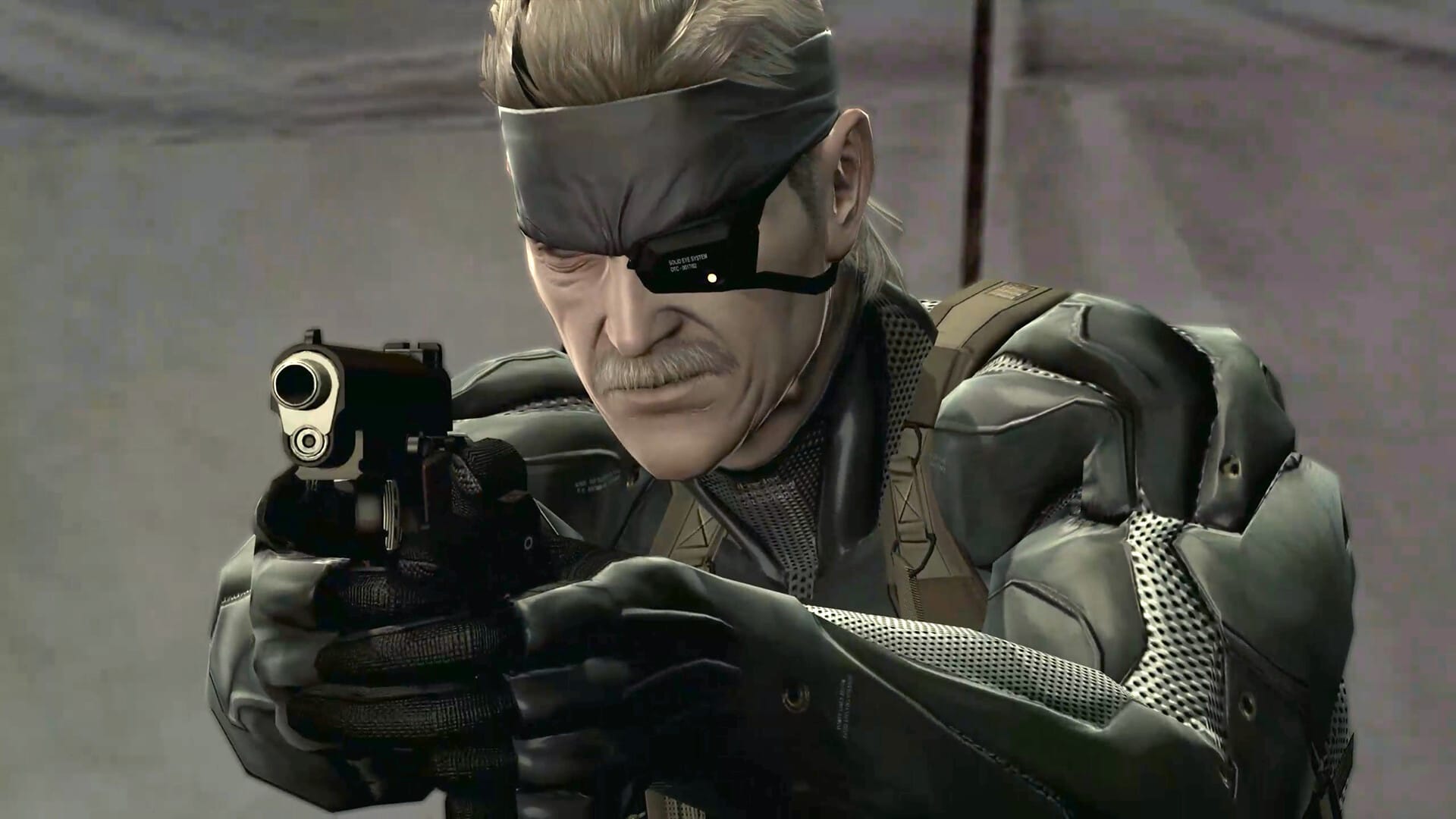
As we get to MGS4, set in the then-future of 2015, we see Snake as a much older man — a result of the cloning process having accelerated faster than anyone expected. Snake is dying, but he's determined to defeat Ocelot, now calling himself Liquid Ocelot.
The game is set in the Middle East, South America, and Europe, as well as Ocelot's mobile fortress, the Arsenal Gear-class Outer Haven. But one location that Snake visits in MGS4, which relates to this theme of nostalgia more than any other, is Shadow Moses, the location of the first MGS game, released on the original PlayStation console in 1998.
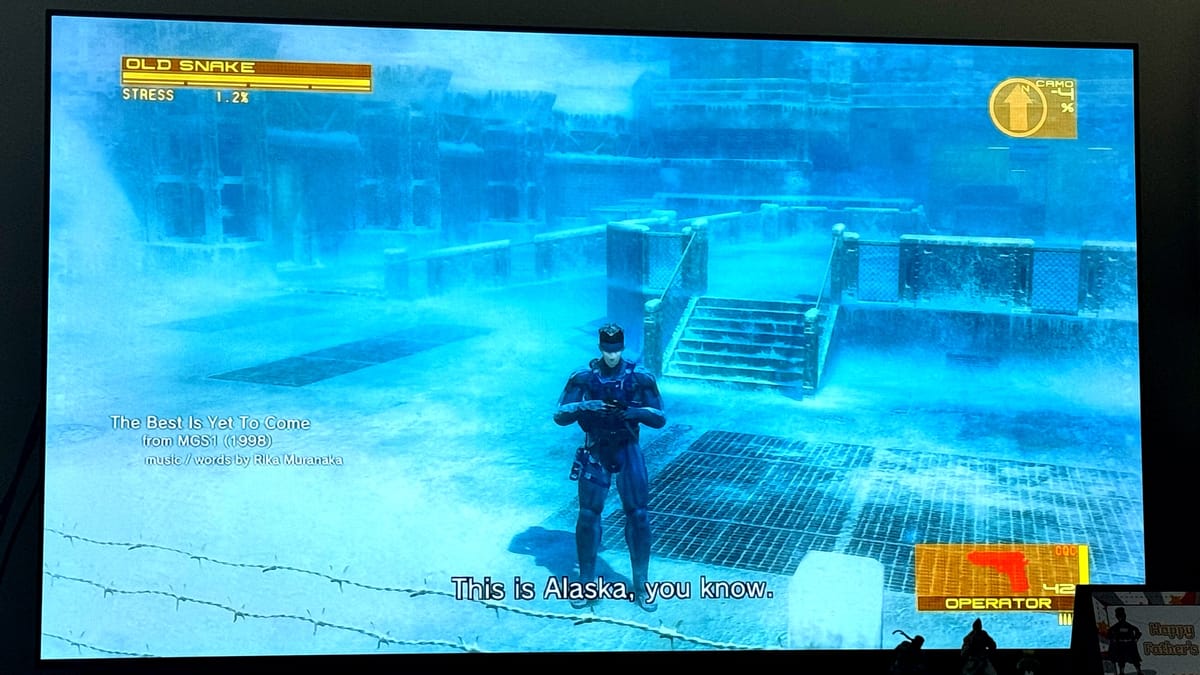
The chapter starts with Snake dreaming, being back at Shadow Moses — but as the PS1 game again. Playing this for the first time in 2008, I couldn't believe it. This was the original game! You walk around the Heliport as before, and once you crawl into a vent, Old Snake wakes up in the present day, remarking to Otacon, "I've been having that dream again..."
Soon after, Snake jumps off the helicopter, and you're back in control. All you can see is snow, the odd tree, and some items. Eventually, you discover a path that leads back to Shadow Moses. As soon as you walk through, the snowstorm almost clears, just enough for the Heliport to appear, in its remade PlayStation 3 graphical glory, with 'The Best is Yet to Come' playing - a track from the first game.
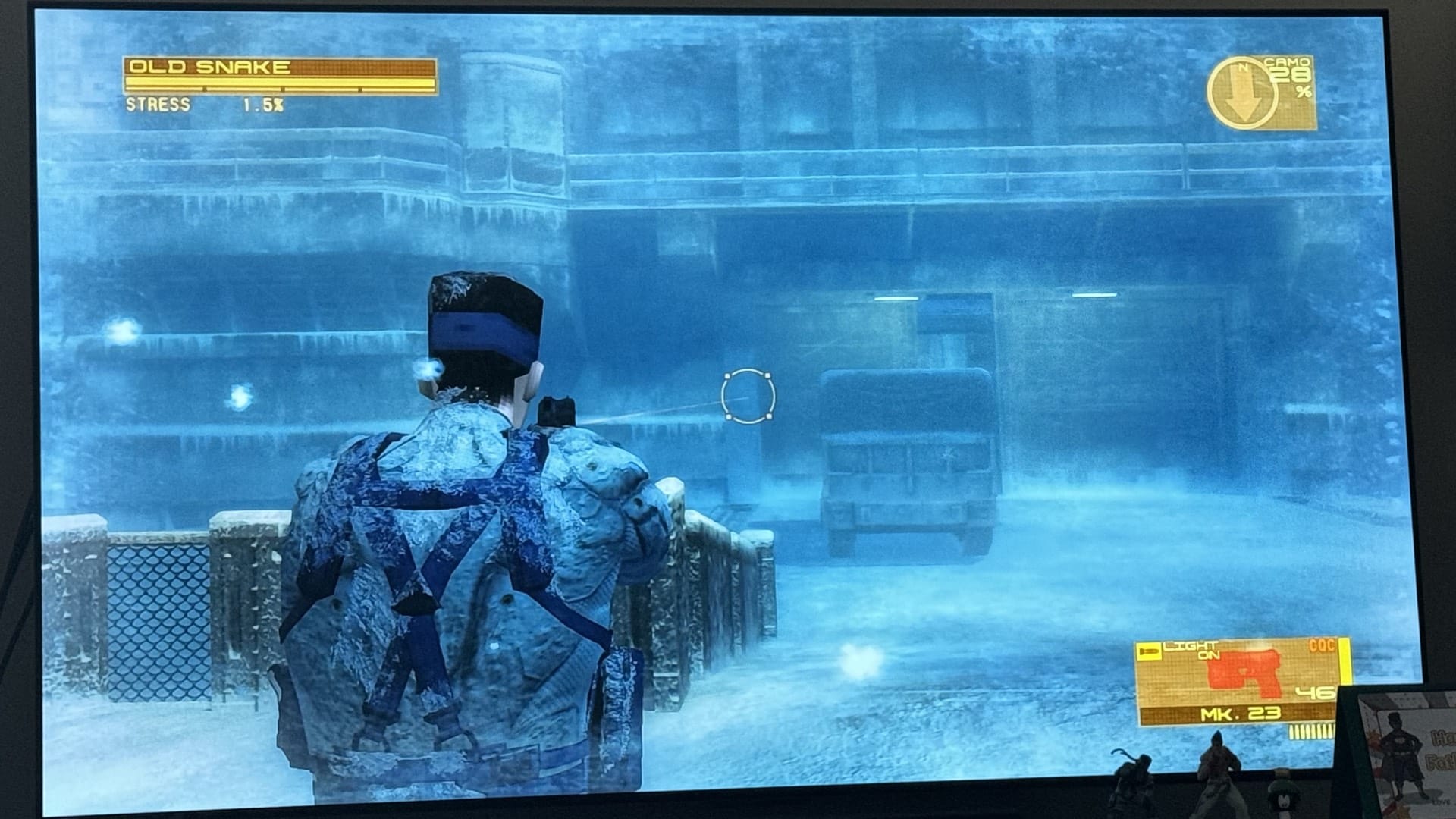
At that moment, especially if you played MGS1 as a kid in the late 90s, the nostalgia hits you like a train - and it did for me. Not only are you walking around on familiar ground, but the memories come flooding back to Snake as you hear codec calls from the original game. Even when you approach a security camera, a small scene plays, and when you're given the option to press X, Snake remembers how he came across the same camera in MGS1.
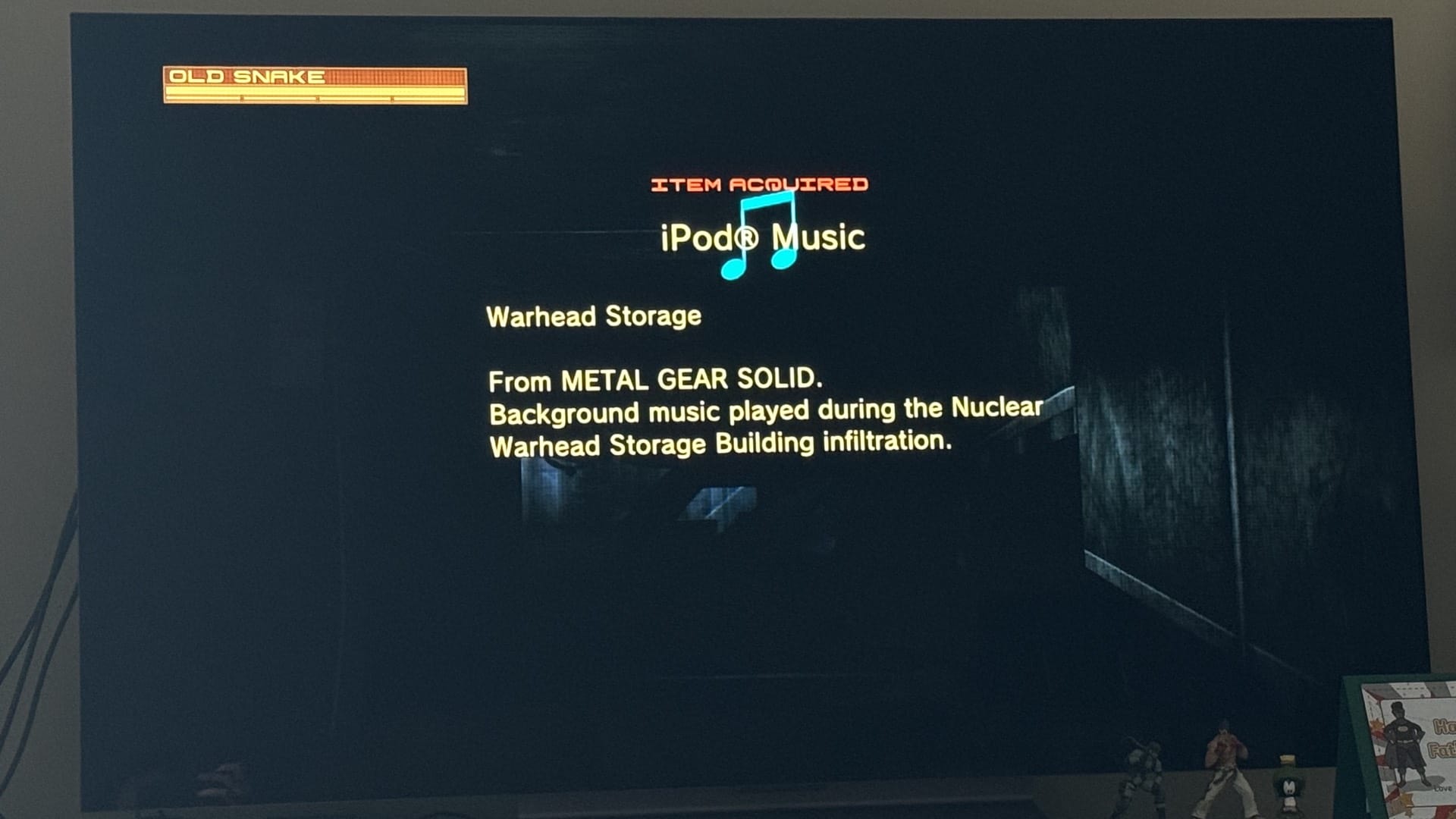
A weapon that's similar to the SOCOM, used in MGS1, can be found under the truck. If you get Snake to equip it, as well as changing the camera to an overhead view, Snake remarks, "Just like old times."
Time and time again in this area, nostalgia hits. Even if you merely played the demo of MGS1 in 1998, which featured the start of the game up until you meet the DARPA Chief, you're bound to feel some familiarity here.
Going back to Guinan, the blanket wraps you up nice and tight here — the music, the codec calls, and the Heliport. Even when you may get a Game Over, the original theme from MGS1 plays too. It's incredible how good the areas look on PS3, but it's designed in a way that you feel like it is the same Heliport you infiltrated all those years ago.
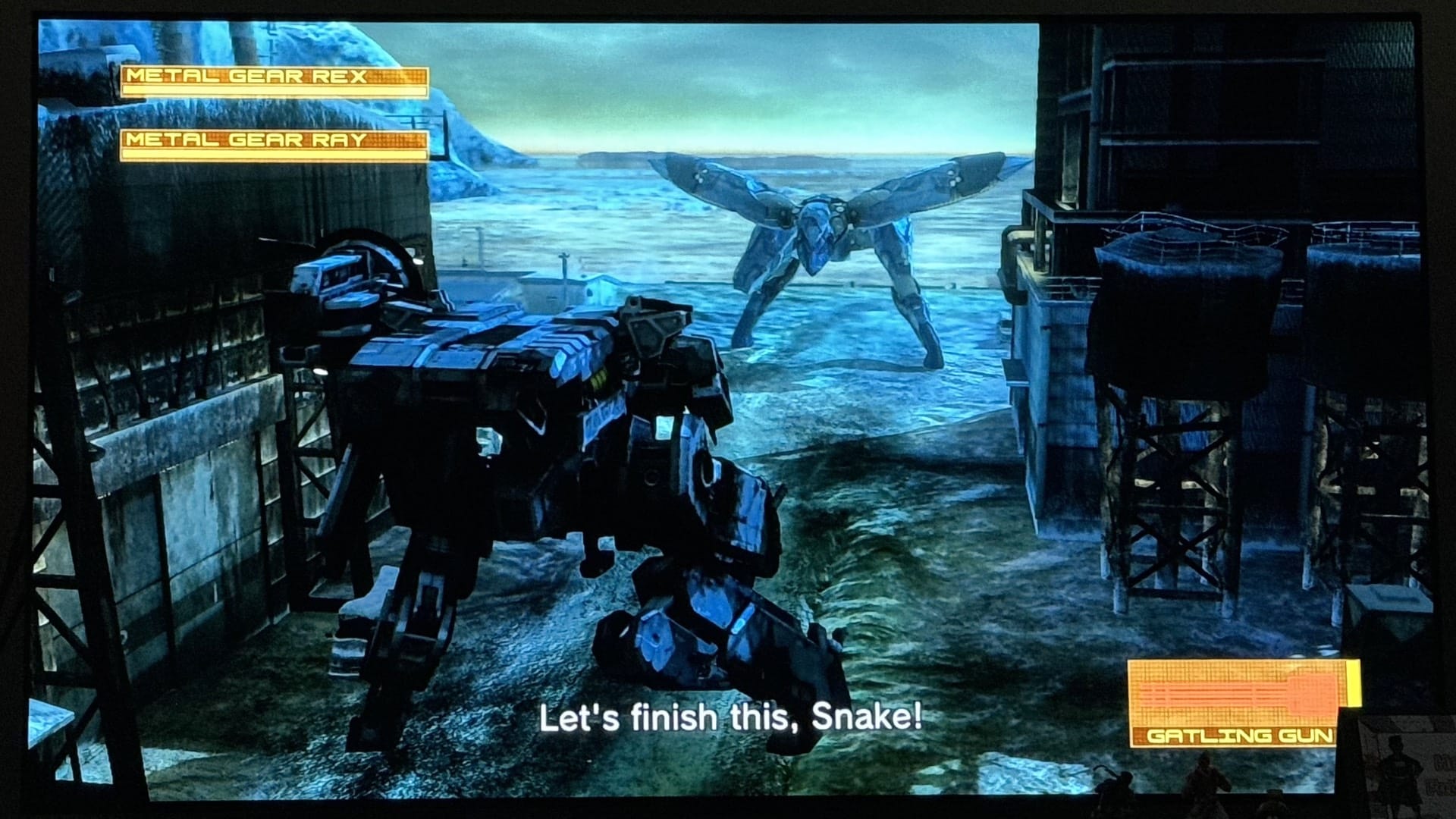
Granted, it doesn't stop there. You visit the Lab where you fought Ninja/Gray Fox, and later on, you control Metal Gear REX, which is one of the best moments in the series. This part of the game is near-flawless, as if it's Kojima's way of letting the player visit Shadow Moses one more time, as well as allowing the player to do things they always wished they could.
It's also why I'm looking forward to playing the game all over again on my Switch 2 and PS5 Pro. For years, I've kept my PS3 in the front room just to play MGS4 whenever I want. But soon, I'll be able to replay all of these moments in 4K at 60FPS, especially on the go with Switch 2. Overall, it's a big win for game preservation, with players finally being able to play Snake's last chapter without having to find a PS3 to play MGS4.
Nostalgia abounds in the game, but it doesn't hit as much as it does until you go to Shadow Moses. It's another theme that, to me, eclipses Kojima's own theme for this game, which is SENSE. According to him, it's a way of someone's understanding of the world that's lost when they pass on. It's true in the game, with certain longstanding characters dying and realising their loss in the world that's to come — culminating in Snake's own sense at the end of the game.
But to me, nostalgia is what shines more in MGS4. The game is a fantastic showcase of that, but also what it means to move on from it, and acknowledge why certain things must stay in the past.