Interview with Aaron Giles, DREAMM Emulator author: "I have Battle for Naboo up and running with some glitches."

Interview with Aaron Giles, DREAMM Emulator author: "I have Battle for Naboo up and running with some glitches."

Playing some classic Star Wars games on modern hardware has always been a struggle. From Star Wars Trilogy Arcade to Rogue Squadron II and III, it's often been down to digging into how the games run on certain emulators, like Dolphin and Supermodel. So imagine my surprise when another emulator managed to run the PC version of Star Wars: Episode I: The Phantom Menace on my Mac with no issues, after years of struggling.

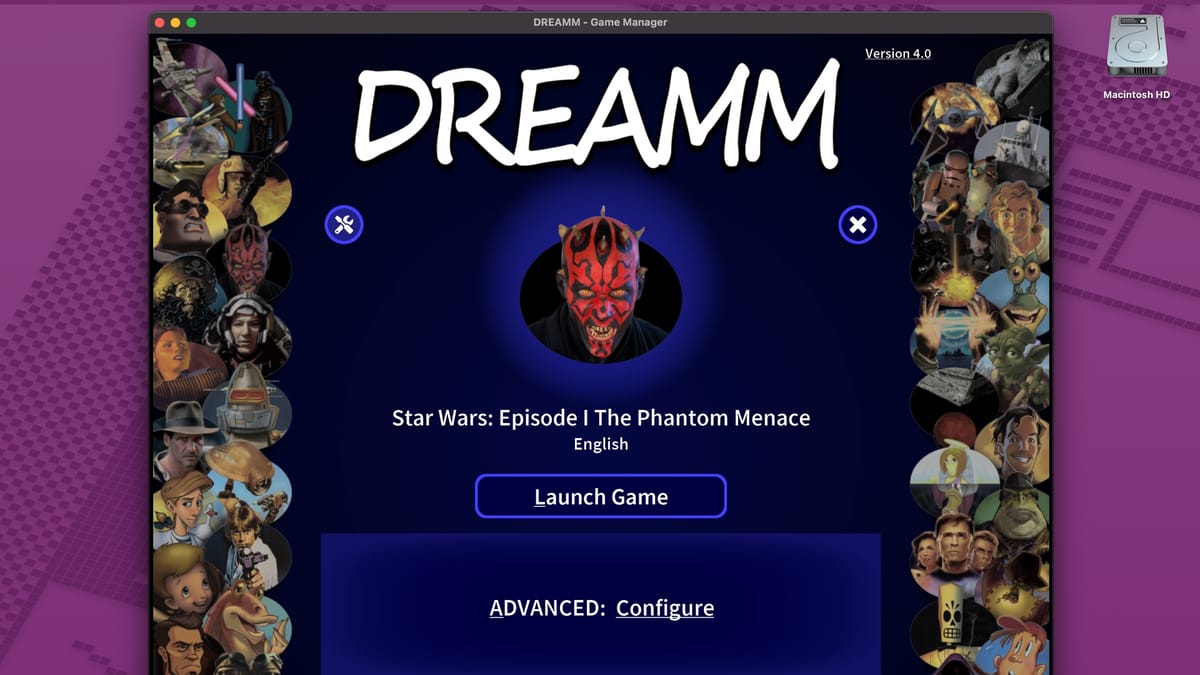
DREAMM, developed by Aaron Giles, is an emulator that runs most of the library from LucasArts, Lucasfilm, and LucasLearning companies. First released in July 2022 as a way of running SCUMM (Script Creation Utility for Maniac Mansion) games like Day of the Tentacle, The Secret of Monkey Island, and others, DREAMM has expanded to cover even more games.

But it's version 4.0, released in March, that's made a big impression. Six late-90s Star Wars games are now playable via DREAMM, which include Star Wars: Episode I: The Phantom Menace, Rogue Squadron, and X-Wing Alliance. Since the emulator is also available on macOS and Linux, these games can now be played on your Mac or Steam Deck without issues.

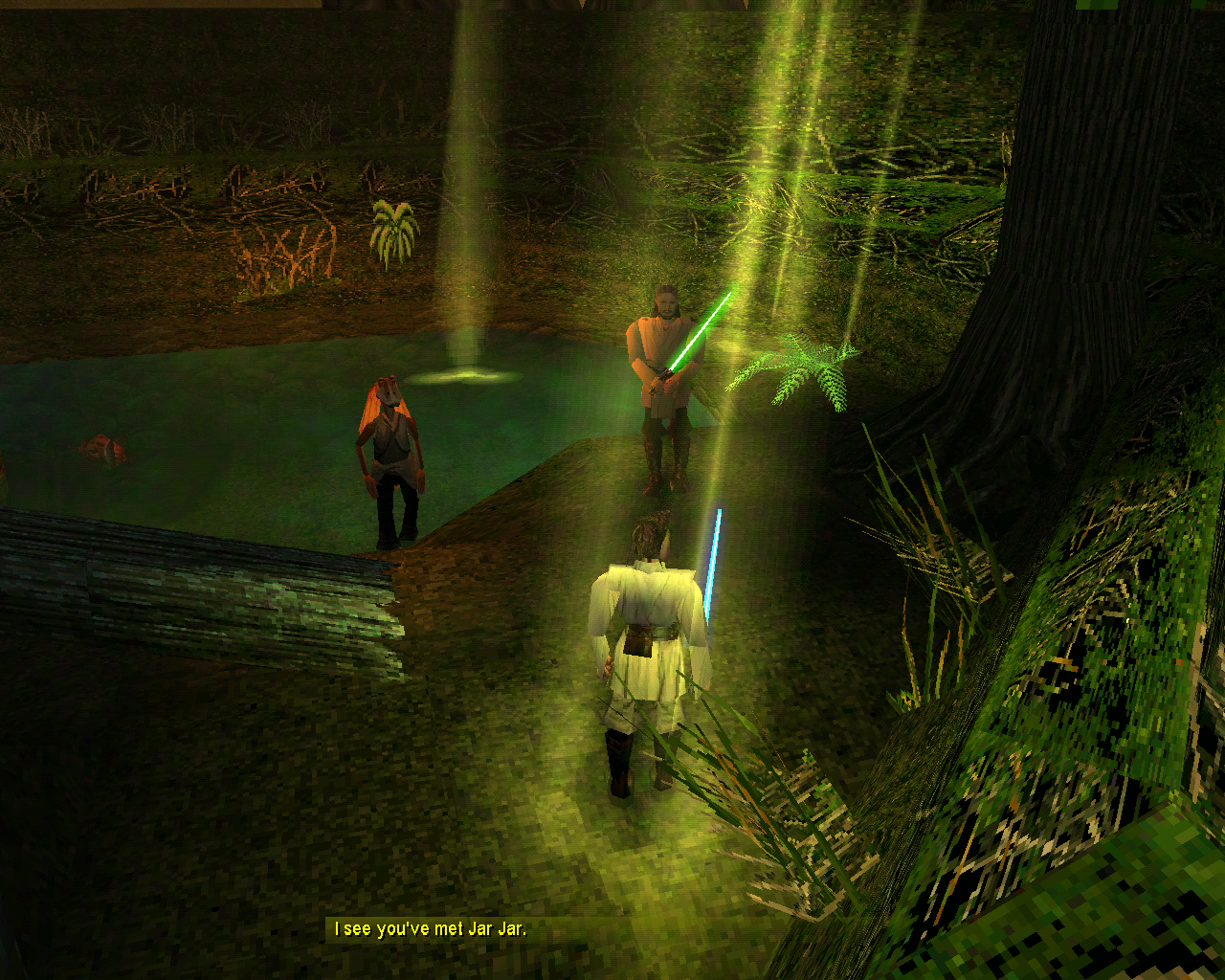
The PC version of Star Wars: Episode I: The Phantom Menace (TPM) features better graphics and exclusive cheat codes compared to the PS1 version I grew up with, but I always had issues playing the game on both a PC and a Mac. However, when it came to DREAMM, I merely dragged and dropped an ISO file of the game into the emulator, and within five minutes, I was playing it.

To mark DREAMM 4.0's release, I spoke to Giles about how it came to be, what the major update means to him, and whether we'll be seeing more games featured in the emulator soon.
A DREAMM to play

All of this was captured within DREAMM on an M1 Pro MacBook Pro.

What made you create DREAMM to start with?

Giles: I was inspired after doing an interview about my past Windows ports of the LucasArts SCUMM games. I realized I was still salty after all these years about how they were handled by the company, so I started thinking about how I could resurrect them, at least in spirit. Out of this came DREAMM, which was my attempt at re-creating the experience of those Windows SCUMM ports, but using emulation under the hood instead of recompiling the source code.

DREAMM was meant to just run SCUMM games, but now I’m playing Rogue Squadron and TPM on my Mac - what prompted the change?

When you have an emulator, the temptation is to throw everything you can at it and see what works. I could have positioned DREAMM as a general-purpose emulator, but I really wanted to create a seamless user interface, and so I settled on the idea of a “curated” emulator, designed to just run certain games that I’ve put in the effort to ensure work well. At that point, I needed a “theme” for what games to support, and continuing deeper into the LucasArts catalog seemed the natural approach.

Was there a ‘ah-ha’ moment for 4.0?

I had a few goals for 4.0. One was to reach the turn of the millennium and the Episode I games in the catalog. Another was to get network play going so that that aspect of gameplay was preserved. Then I remembered that there was a whole Lucas division that was created around that time (Lucas Learning), and they made a bunch of games that are mostly forgotten and also very difficult to run on modern systems, so that kind of became my ‘guiding star’ for the release.

Is there anything that you wanted to do for 4.0, but made more sense for a future version?

Heh, 4.0 dragged out so long that I ended up getting most everything I wanted!

All you have to do is drag and drop the game's image file into DREAMM, and you're ready to play.

One big feature I love is dragging and dropping an .ISO file of TPM into DREAMM, and 2 minutes later, I’m playing the game. Was it an aim to make sure the UI was as accessible as possible for many users, especially those who may be new to emulators?

Oh yes, for sure. I put a ton of effort into the user interface and a lot of effort into detecting and installing games. Fortunately, I have several key people who help dig up and test all the various versions to help ensure DREAMM is aware of them all and can install them as efficiently as possible.

Do you see DREAMM as a preserving tool for these games, or a way of bringing these titles to new audiences?

A bit of both. In terms of preservation, the team of folks I’ve been working with has managed to unearth tons of international and demo versions that were extremely hard to find. Knowing that these releases exist and are documented and archived feels great. At the same time, I love to hear when people are able to revisit games from their past and enjoy them once again, or discover something new they never had a chance to play before.

Has a game running on DREAMM surprised you in how well it runs, or better than it originally did?

Since I do all 3D rendering in software, I’m frequently amazed at how well some of the higher-end 3D games perform, both at the high end (everything screams on Apple silicon) and at the low end (the 3D games run surprisingly well on my Raspberry Pi 4).

Amazingly, DREAMM was licensed for TETRIS Forever - it seems like 5.0 could be great to run certain games on modern platforms. Have there been any initial talks about this?

I’m happy to have DREAMM be able to bring DOS emulation to a wider audience! DREAMM was also used as the DOS emulator for Rayman 30th Anniversary Edition, recently released by Ubisoft, and there is one more title that should be released soon that is using DREAMM. My dream (heh) would be for Disney/LucasArts themselves to leverage DREAMM to support selling the games on GOG/Steam.

Games like Battle for Naboo and Star Wars: Starfighter now seem like natural fits for DREAMM - could these appear in a 5.0 update?

For sure. I actually have Battle for Naboo up and running with some glitches, so that’s definitely on the table. Haven’t tried Starfighter yet, we’ll have to see.

Is there a specific game you’d love to see DREAMM emulate someday?

From LucasArts? Not too much more, maybe Indiana Jones and the Emperor’s Tomb, but that might be too taxing. Outside of LucasArts, I can imagine a lot, but that would require an expansion of DREAMM’s focus.

Looking back on DREAMM, has your perspective on emulation still been the same, all these years later, from Connectix to today?

It’s always been evolving, but for me, the thing I love about emulation today is the same thing that got me into it in the first place 30 years ago: learning how systems are designed and working to re-create them in software. There’s always something new to explore, and it lets me dig into everything from graphics and sound to OS design to chip design and everything in between.

Many thanks to Aaron for taking the time to chat with me.

🦖
If you're enjoying Springboard, I'd love it if you'd consider a small tip to help cover my monthly bills. (Follow the link and click 'change amount' to whatever you want).

There's plenty of opportunity here for Disney and Lucasfilm Games.

Years ago, emulators were seen as a black sheep by many. "It's just a way of piracy, playing games on your PC for free," you'd read. But as machines become faster and adapt new chips, much like how Apple's systems run on custom ARM chips instead of Intel ones, classic games become harder to run on these devices. It's why emulators like Giles' DREAMM are crucial, and are even helping official collections, like TETRIS Forever and Rayman: 30th Anniversary Edition.

Despite being able to play Star Wars: Episode I: The Phantom Menace on a PlayStation 4/5, its PC port is incredibly difficult to get running. I remember trying to get the game to run on both my Gaming PC and my 2013 MacBook Air back in 2020 during the COVID-19 lockdown. Nothing worked, and in 2023, trying the same with my M1 Pro MacBook Pro brought the same outcome.

But thanks to DREAMM 4.0, it took less than five minutes to have it running on my Mac, complete with higher resolution support. It's emulators like these that are helping to preserve games, to make them more accessible. If Disney and Lucasfilm Games have yet to get in contact with Giles, they should. The opportunity to license DREAMM in order to get some long-forgotten games running on modern systems feels like a slam dunk.

With a newfound respect for the Prequel Trilogy in 2026, to have Battle for Naboo be playable again would be a win for many. Game preservation is more important than ever, and if Disney and Lucasfilm Games are serious about looking at past games, emulators like DREAMM show that the path to bringing some titles to modern systems could be easier than they think.

Thanks for reading.

Gallery