Develop:Brighton 2026 recap: 4J Studios, accessibility, ustwo's PC pivot, and Tebex
From Accessibility to the Streets of Gotham

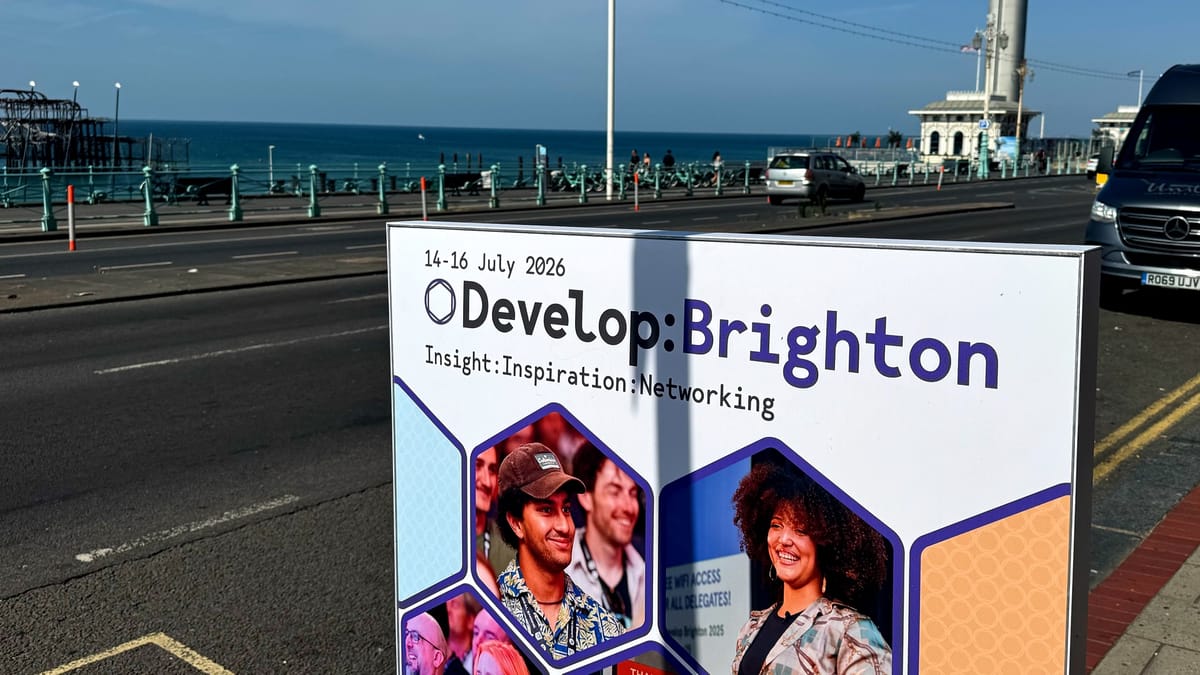
Develop:Brighton 2026 was my first visit to the event after years of following it. One aim I've had in the past 18 months was to meet those in the industry that I've followed and spoken to on social media for years. The result was a bunch of fantastic chats, as well as meeting others, which have resulted in some future Springboard issues.
Being held in the Hilton Metropole in Brighton, there were countless events that I tried to attend - some overtook others, but meeting some of the speakers made up for my absence. It was a really great three days - so the below is a recap of that time.

Reforging Purposes
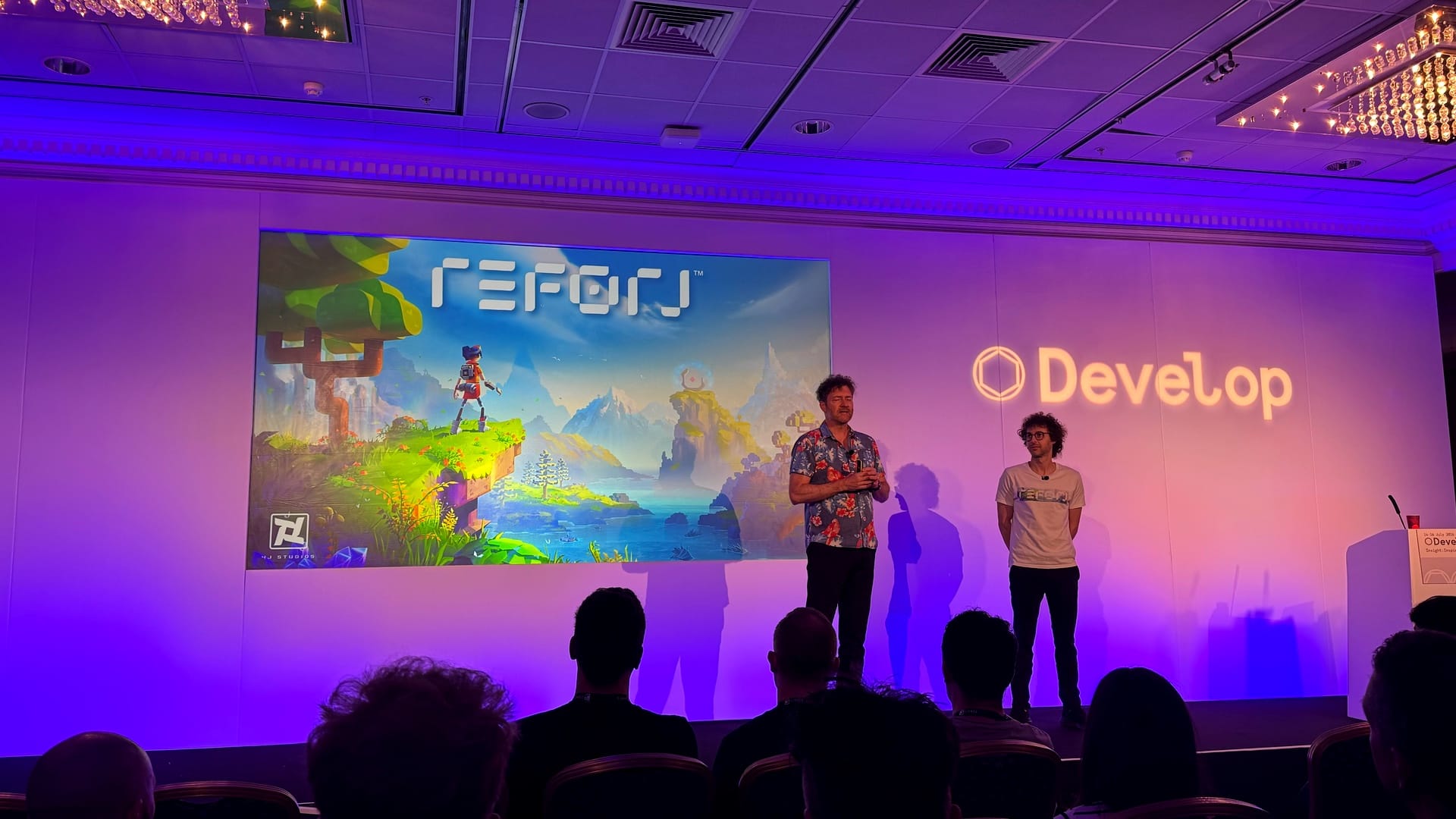
Having checked into the AirBnb and Jolly scoping out the place and the beach, I went to the Hilton on Monday to get my pass. A straightforward affair, but it made me go over the talks I was planning to attend. I'm glad I did, as I found myself at 4J Studios' opening keynote on Tuesday morning, where Chris van der Kuyl and Joseph Garrett spoke about Reforj, their Minecraft-inspired title - and it was a great talk.
I'll be purposely leaving it there, as I got to speak to the team later that week, for something that'll be coming to Springboard very soon. But not only was Reforj discussed, but State of Emergency and Earthworm Jim 3D.
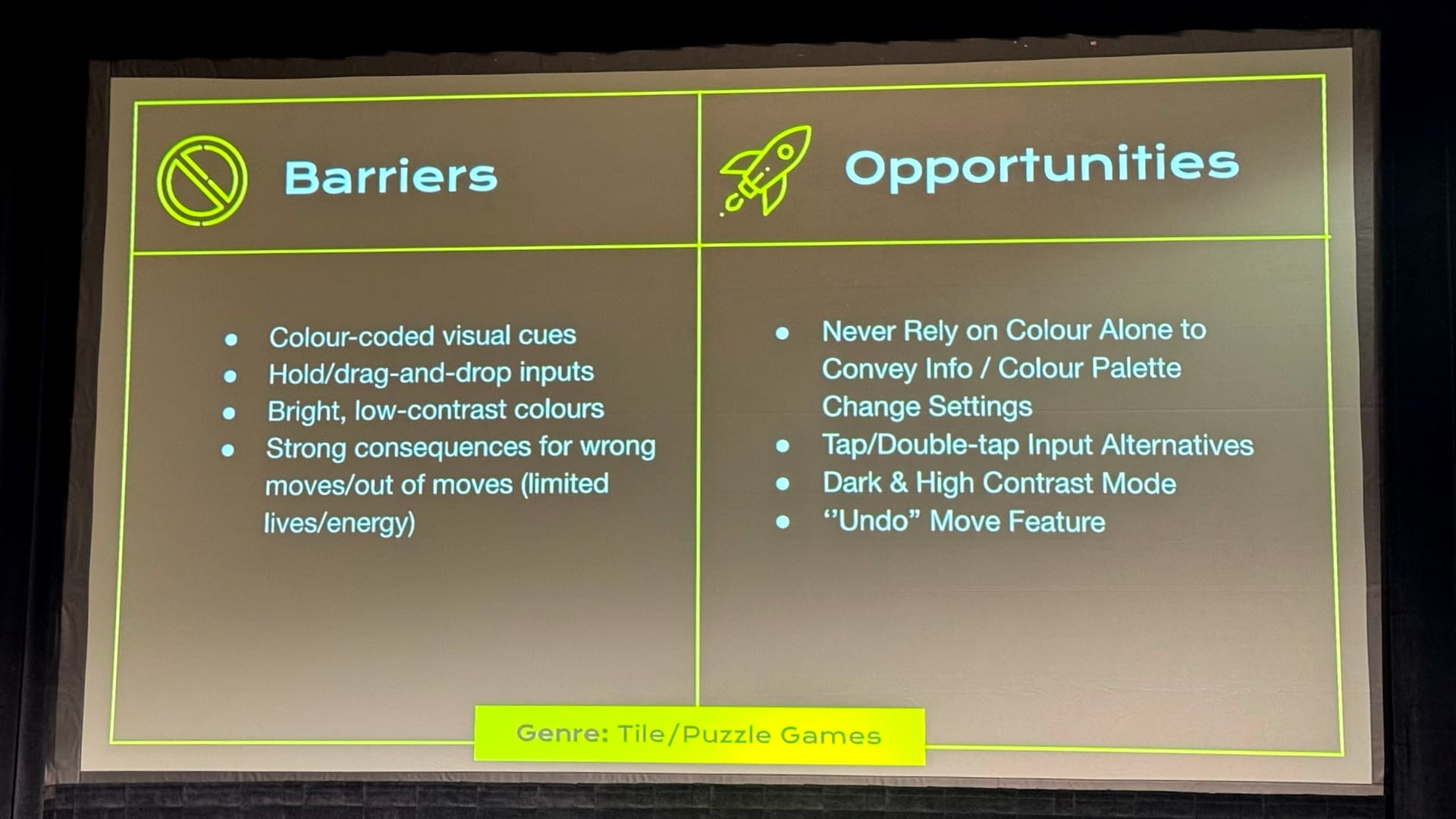
One aspect I was pleased to see was a few talks focused on accessibility. Despite there being a bigger concerted effort to make games more accessible to others, the topic is still not spoken about enough - but Develop was the exception.
There were keynotes, roundtables, and stalls about many aspects of Accessibility. What I loved about Tuesday's 'MOBILE GAMES: When Approachability Rhymes With Accessibility' talk is how both speakers, Améliane F. Chiasson and Cari Watterton, leveraged their experiences on how certain genres can be made more accessible to disabled users.
Améliane:
"If you're able to identify which barriers currently prevent players from engaging with the core of your experience, this exercise will be very helpful because that's where you want to start. If you're spending a lot of your time and energy on many things that are not going to be the things that people engage with that much, that maybe you're wasting your efforts a little bit."
Cari:
"If you have someone that has to use their phone on a mount on their wheelchair, most of their apps that they're using are going to be in portraits. If they have to turn their phone to be landscape to play your game and they may not have the capability to do that, they might need assistance, they might need someone to come and do it for them, then that's going to be a big barrier."
"It can be as simple as one box that is like, hey, when you're doing your design doc, just write down what are the accessibility impacts of this? What are the barriers? Are there features that I want to put in here? Is there a way that I want to make this more accessible?"
These two quotes stuck out for me. It's the little things when designing a game that can be a big difference for accessible users.
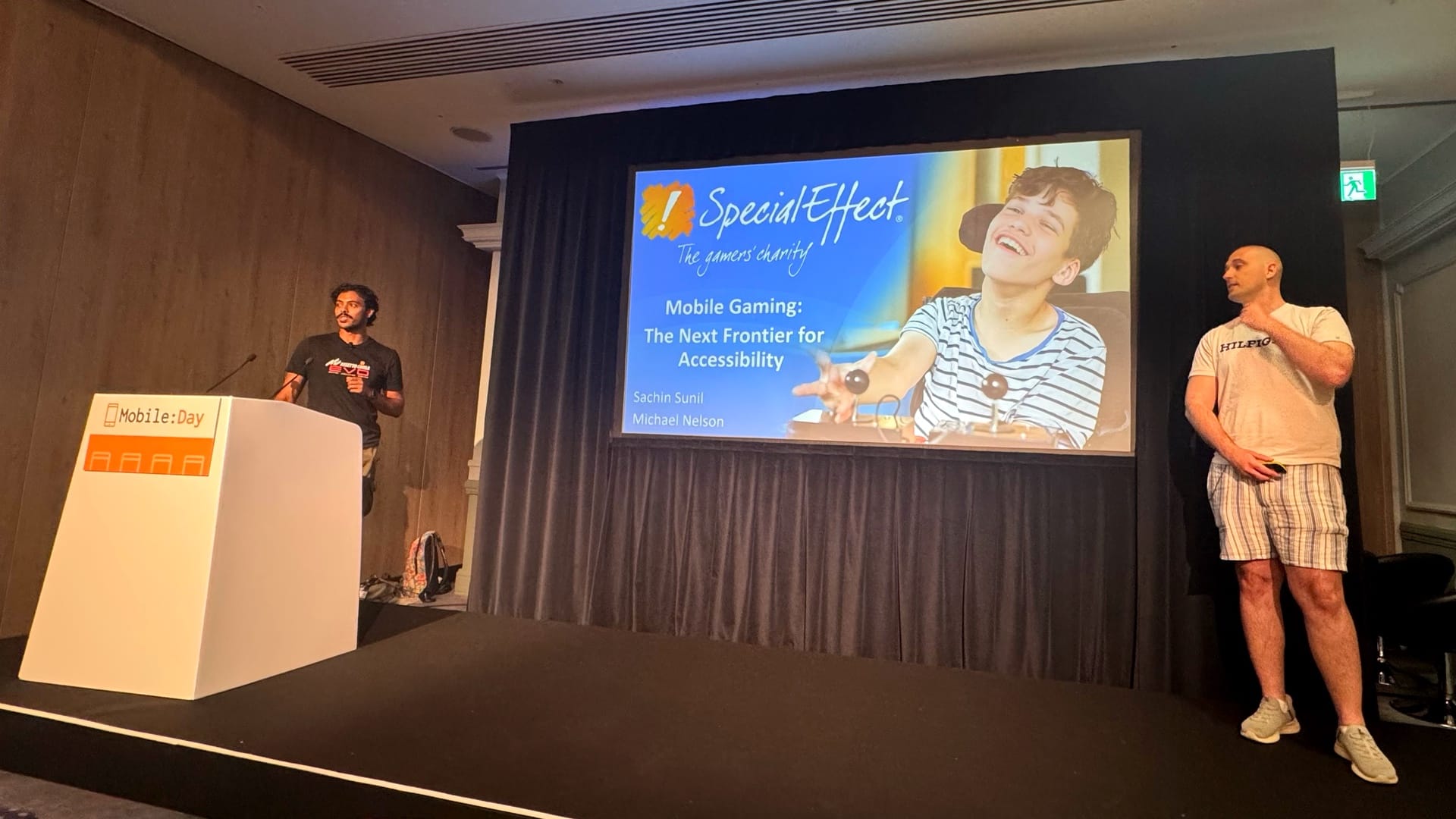
Another was SpecialEffect's fantastic talk on Tuesday afternoon. Hosted by Michael Nelson and Sachin Sunil, they showcased how games give countless users a new sense of freedom from their beds. Joysticks can be controlled with chins or eye-tracking. They also seemed to re-announce their DevKit, which lets developers learn how they can make their games more accessible. It's a great amount of documentation, and something Springboard will be revisiting soon.
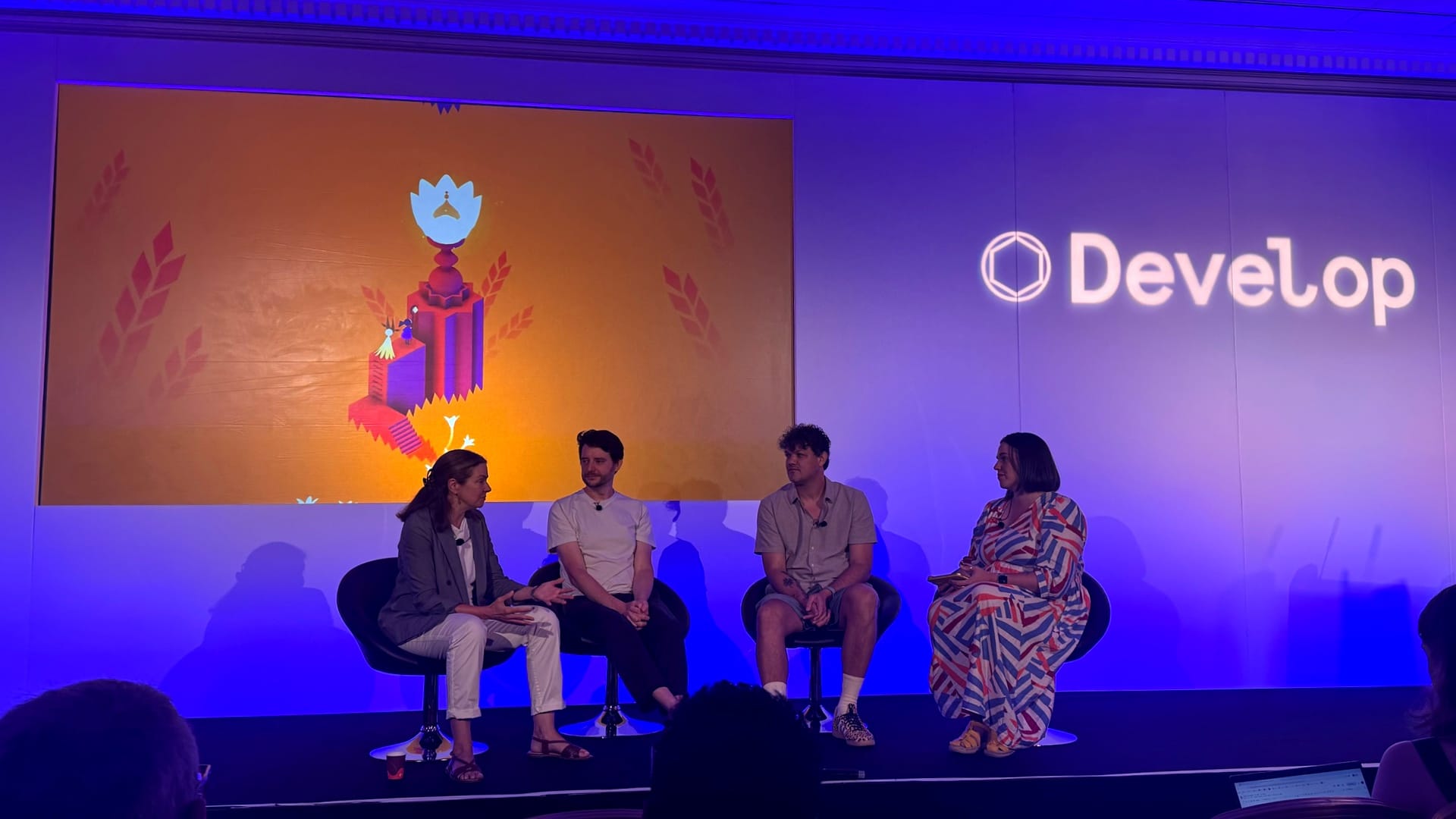
Another talk featuring ustwo games, known for the Monument Valley series and Alba, was another great one. On stage were Maria Sayans, Daniel Gray, and Peter Pashley. I was expecting a debrief on their past games, but instead it was about the culture of ustwo games, and about the pivot of focusing on PC instead of mobile.
Maria:
"The games we wanted to make, we just couldn't make them profitably on mobile on our own without either Apple or Netflix paying us to make them. And Apple or Netflix, they don't want to pay us anymore to make those kinds of games."
Daniel:
"The only way for us to do mobile games would be going to free to play, and I personally don't feel comfortable with something that's designed around habits."
It was refreshing to hear them speak about their pivot and how they believe that games shouldn't be built on routines. There were the odd hints about whether some cancelled games could work on PC now, but we're likely a few years away from hearing about these.
There was an AI talk, where much was spoken about using several LLMs to test some games - but I just found it pointless. I kept thinking, 'So what?' and 'Hire humans for this.' It goes back to my feeling that, whilst the technology can be impressive, the oxygen being given to it, such as this talk, felt incredibly misaligned and as if some had drunk too much of the AI Kool-Aid.
Fortunately, this was just one moment where AI was given time to shine, and then seemingly put in the shade for the rest of the week.
The Lego Rises
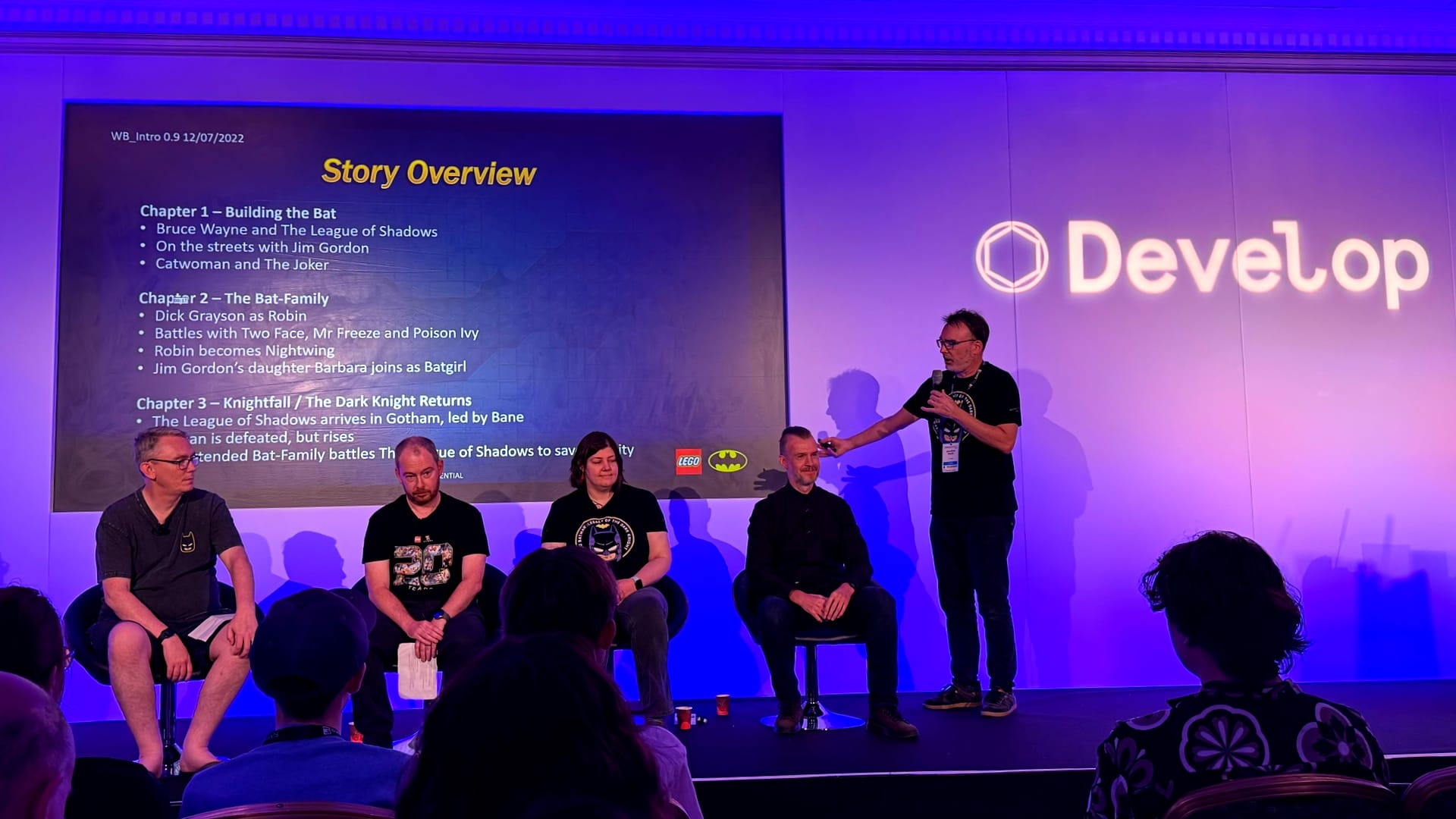
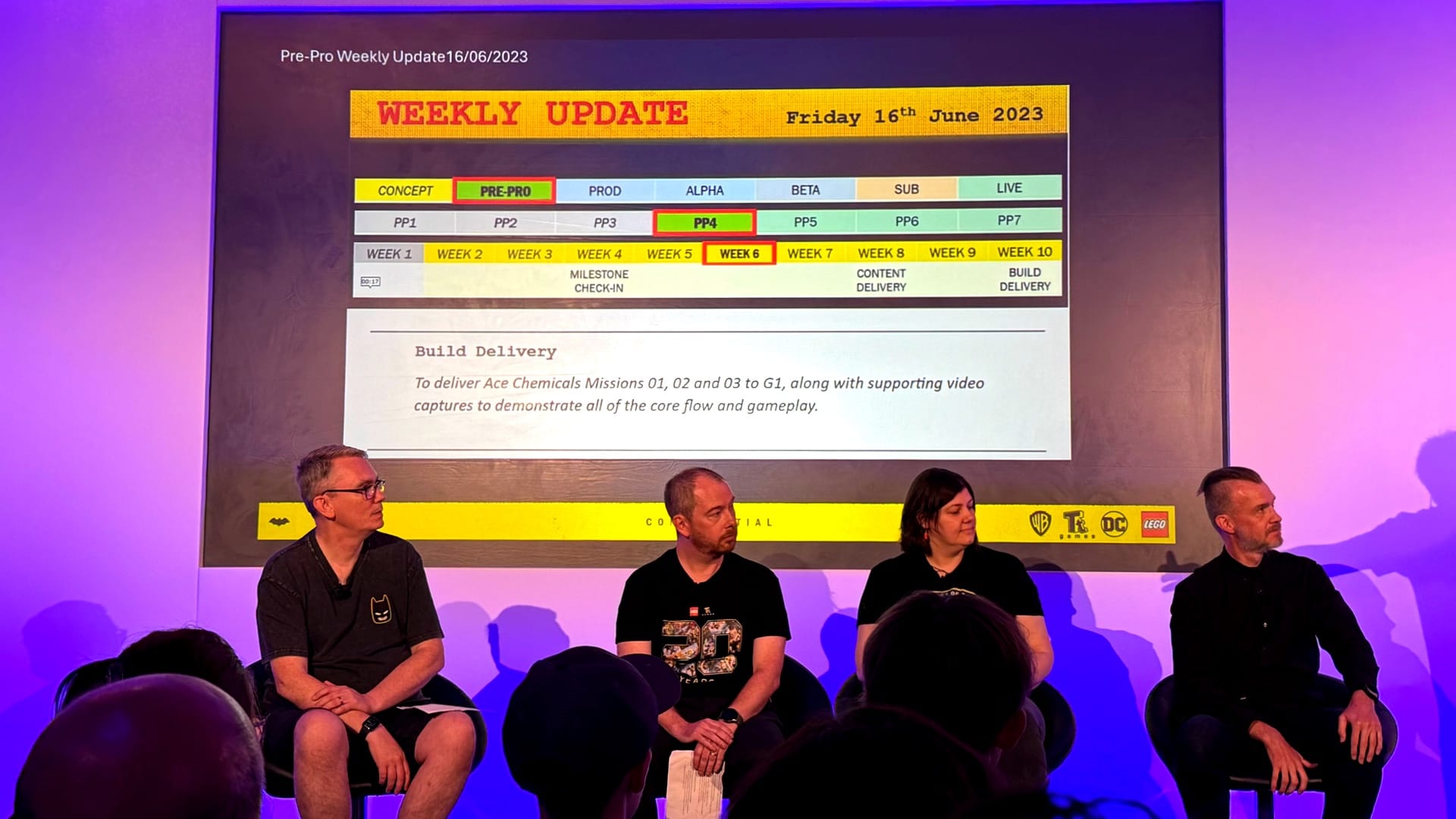
Lastly, another highlight was TT Games with a debrief on Lego Batman: Legacy of the Dark Knight from some who were involved in the making of it. This involved Mark Green, Dave Woodman, Rian Walters, and Ruthie Nielsen, with Jonathan Smith of TT Games leading the talk.
Jonathan Smith, Studio Lead:
"What if we took all of Batman? All the history, all the moments, everything we remember and love about that character. And then made it new and fresh in Lego form."
Another aspect was transforming Gotham City across different eras, which Dave Woodman explained:
"A good example of the first era would be a vinyl store, the second era would be a CD shop. Then in the final, it was like, traditional media like that has gone away and it's become a phone shop, or it's shut down, or it's closed, or it's up for lease now, or it's come back as another shop. So it's just all these opportunities to tell a story."
Finally, Rian gave a great answer in working with the lore for players who will be under 12 years old:
"We were able to take those perhaps darker scenes and think about unique ways of telling those stories in a way that isn't going to make children cry. That was our objective, not to make children cry!"
What I loved was how much this team enjoyed working on the game. To see images of the pitch in 2022 as well as watching a time-lapse of a section of Gotham City go from prototype to release was fantastic.
Tebex To Me, Tebex To You
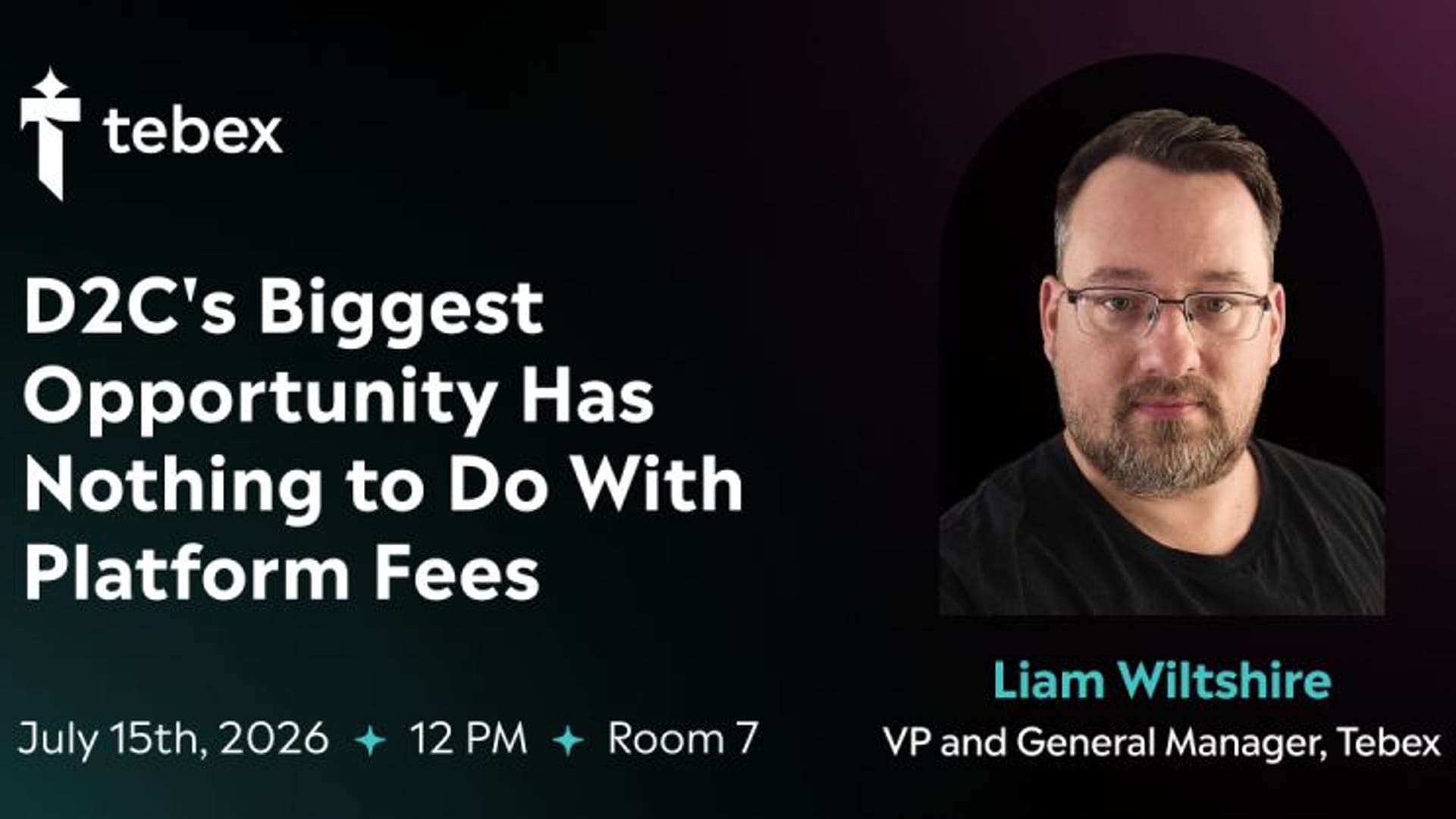
But Develop is also a B2B (Business to Business) event, with talks going in-depth on transactions and more. One to highlight was Tebex, a payment system that VP and GM Liam Wiltshire spoke about in a talk on Wednesday. We had a chat the day after about third-party app stores potentially taking on transactions via Tebex to save some headaches, and more.
A lot of alternative app stores are opening up in the EU. What's your view on them, and how much control do they actually hand back to developers?
Liam: The minute a third-party app store tries to make it a closed system again, that's where it's not going to work. A lot of these app stores are keeping the good bits; they're keeping the distribution, the discovery. But they're still saying to the game developer, you can have that direct relationship. You can do your own payments. You can do subscriptions that don't necessarily fit into our standard model. You can bring your own ads, whatever it might be.
Regardless of how you solve it - and merchant records like Tebex is one way, other third-party platforms are another - there are lots of ways to do it. But the reason all these things are growing is that they're saying: we'll deal with the hard stuff, but we will give you the power back on everything else. And that's the shift we're seeing.
For a small studio, what does a merchant of record actually take off their plate?
If you are an indie studio, you're a one-person shop or a couple of people, trying to deal with distribution and tax and support and chargebacks and all of this stuff would be bonkers.
And absolutely, I think anything that solves those problems while still giving the community building back to the app developer, the studio, whatever, is a win. That is ultimately a win. Whether that's using a merchant record, whether that's using a third-party app store, whether that's Itch or whatever it might be, there are lots of ways to do it.
Where do you see AI genuinely helping developers, rather than just adding noise that we've seen almost everywhere so far?
You can almost spot an AI-generated website a mile off. The majority of them look very, very similar, the same rounded radius on everything. And you go, okay, well, these were all generated by whichever AI; I'm not going to use it. We don't want to be in a situation where every game looks the same, every storyline looks the same.
We absolutely do not want to be in that situation. But there are absolutely ways, particularly around moderation, where it can improve everybody's experience. You still need the human moderators, because you're still going to have the things where it isn't black and white and the AI maybe can't understand context. Rather than asking them to look at this really heavy stuff, that gets dealt with, and then you use people for the bits that actually require thought and creative thinking and context understanding.
After ten years of Tebex, what are you most proud of?
It really does come back to the fact that we have been able over the last 10, 15 years to support very wonderfully creative people. They just want to make cool shit. That's what they want to do. They don't want to deal with tax and compliance and support and all this.
They want to make a living doing the thing they enjoy. That absolutely is the thing that I'm certainly most proud of. What we're doing lets them make rent and put food on the table and feed and clothe their kids, and that's really exciting. It's a big responsibility. But I couldn't imagine doing anything else, honestly.
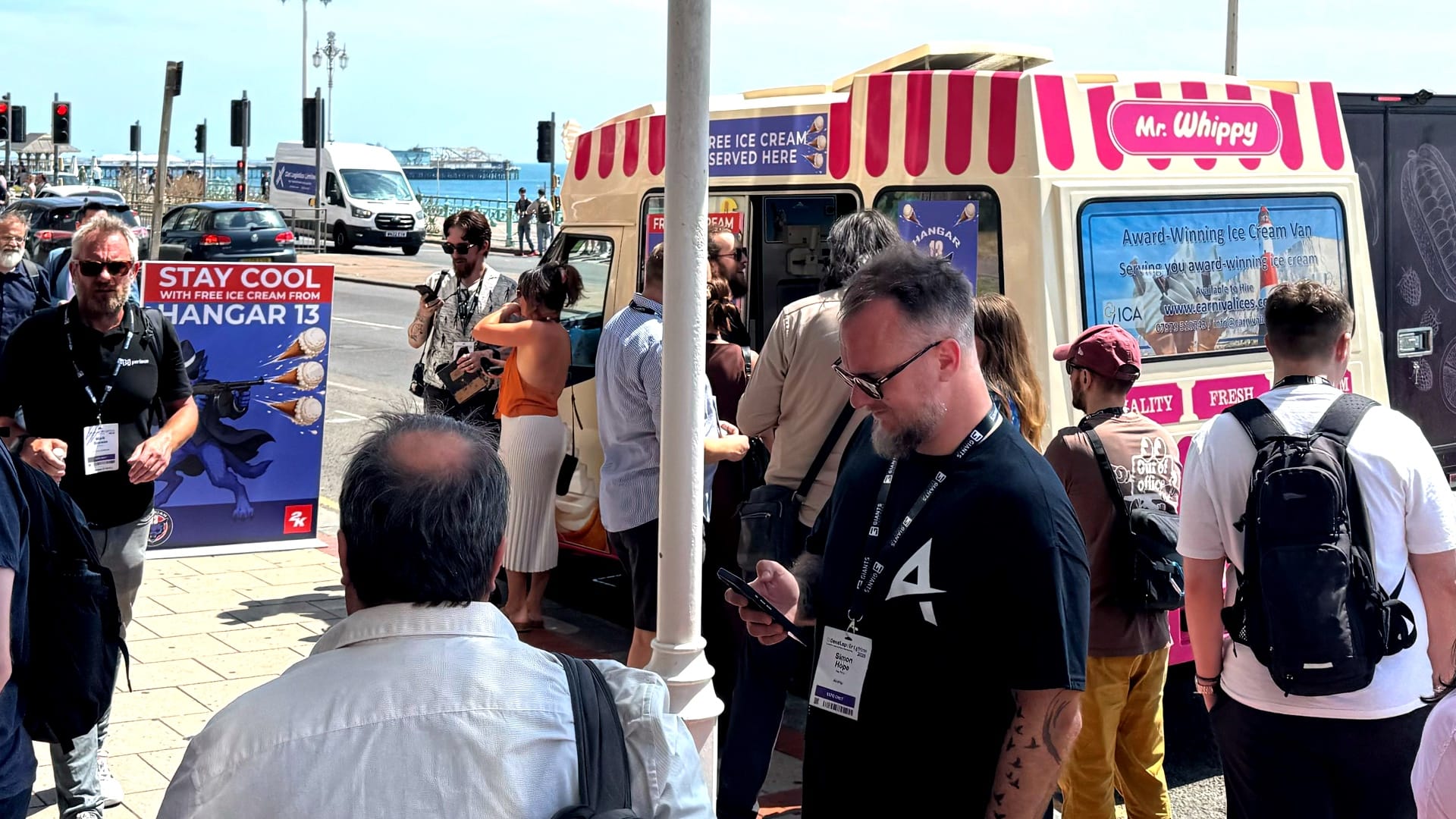
Visiting Develop was a great way of meeting people I had only spoken to on social media. Even with it being almost seven years since we were all in lockdown due to the COVID-19 pandemic, it still felt strange to be in a place with so many people with shared interests and enthusiasm. But it was nice. It was nice to chat to others whose work I've read for years, or who I worked with from what now feels like another lifetime.
In every talk I went to, the drive and the passion were great, because it reinforced my belief that AI is not the saviour that many on some outlets and social media believe. Plenty of independent developers, as well as students and some in companies that have been around for years that I spoke to, are excited about what they're working on.
It's events like these that should be around more regularly, and less down in the South of England. Let's see some in Wales, Scotland, the Midlands. Talent is everywhere, so let's see easier ways of finding it.
Nevertheless, overall I had a great time at Develop, with plenty of talks resulting in some future issues of Springboard. I hope it's here for another 20 years, but hopefully not just in Brighton.